How to Tighten Garbage Disposal Blades Safely
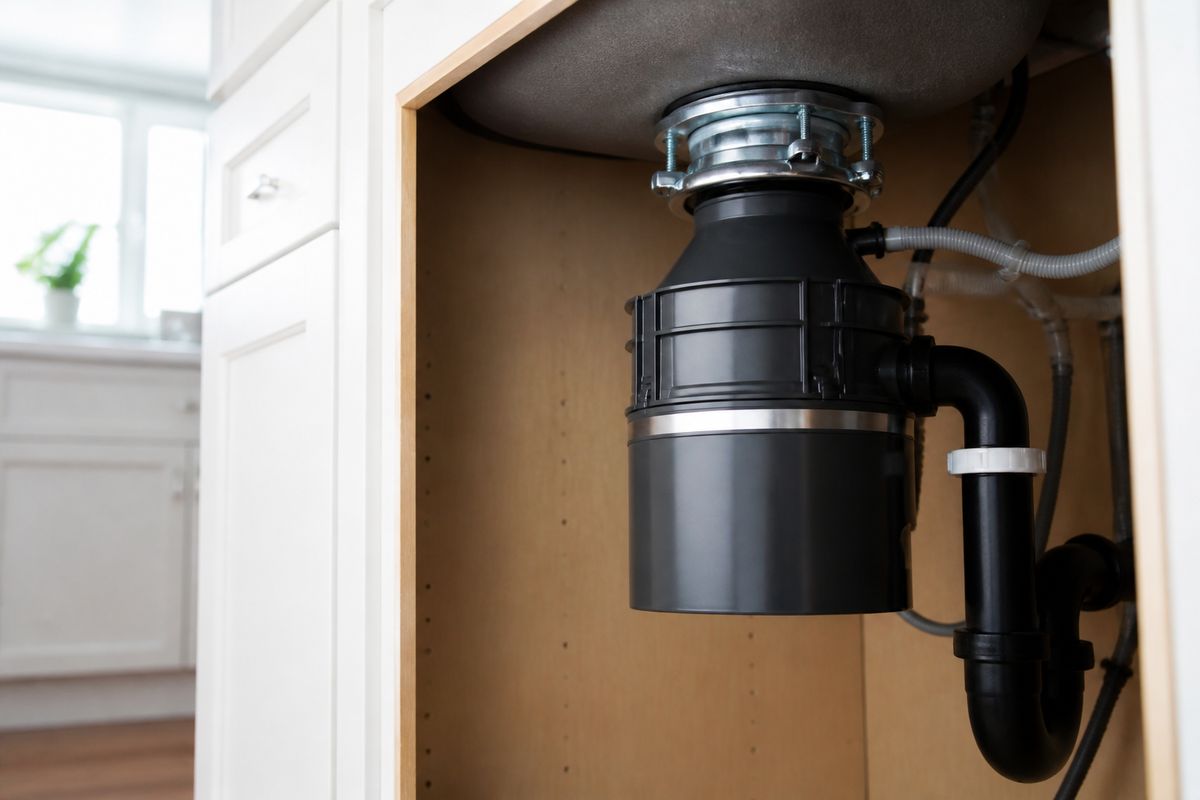
If your garbage disposal sounds loose, rattles, or pounds during grinding, you may be searching for how to tighten garbage disposal blades. The important thing is to understand what you can safely tighten—and what you cannot—before you pull anything apart. In many models, the blades themselves aren’t intended for homeowner adjustment; unstable mounting hardware and minor jams are the usual causes of the problem.
For more help, see our GE Garbage Disposal Not Working: Diagnose Every Common Cause guide.
What’s really loose inside a garbage disposal
Understand the difference between blades, impellers, and the grind ring
Garbage disposals don’t work like loose “blades” you can tighten with a wrench. The motor drives an impeller/rotor assembly that moves against stationary grind elements (often called a grind ring or grinding ring). If the grinding components are worn or damaged, tightening external parts won’t restore proper clearance or balance—vibration and noise will continue.
Spot the signs that the unit is loose, jammed, or worn out
A jam typically causes a disposal that hums or stalls instead of spinning. Loose mounting hardware often shows up as wobbling or louder-than-normal rattling during operation, sometimes with small leaks near the sink flange. Worn internal parts create persistent grinding/grating sounds, uneven performance over time, and repeat failures after resets.
Know when tightening is possible and when replacement is safer
Tightening is appropriate when the issue is external: a loosened mounting assembly, a slipped/loose dishwasher connection, or hardware that didn’t secure the unit to the wall/sink flange. Replacement is safer when internal seals have failed (water dripping from the bottom housing), the motor repeatedly overheats, or internal grind/impeller parts are bent or severely worn.
Safety steps before you touch the disposal
Turn off power at the switch and breaker
Start by turning the wall switch to OFF, then cut the disposal’s power at the breaker. If your disposal is hardwired or the switch controls multiple fixtures, switch off the correct circuit anyway. Do not proceed until the unit cannot be powered—power checks prevent accidental startup while you’re working near moving parts.
Protect your hands and use the right tools
Never reach into the grind chamber. With power off, use tongs or pliers to remove dropped items like silverware, bottle caps, or fruit pits—these are common jam causes. Use a flashlight and insulated tools; if you need to access the motor underside, use a wrench or Allen key that matches the socket size specified by your model.
Check for standing water and clear the sink area
Standing water increases slip risk and can also spread grime when you remove components. Clear the sink and remove anything that can fall in again. Wipe the area dry, and place a towel under the unit where you’ll work so drips don’t create a hazard or hide leaks you need to diagnose.
How to tighten a loose disposal safely
Remove visible debris and free a minor jam
- Cut power at the breaker and confirm the switch won’t start the unit.
- Shine a flashlight into the sink opening and remove any visible debris with tongs or pliers (never your hand).
- If the disposal is jammed, use the correct reset-and-jam-clearing method for your model before checking mounting hardware.
Check the mounting assembly and connection points
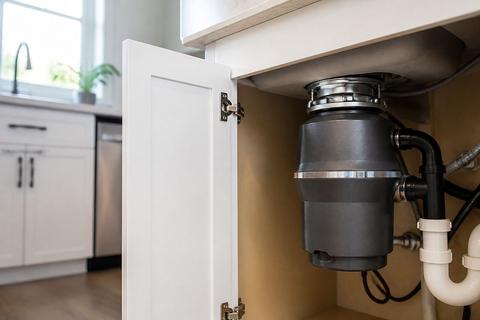
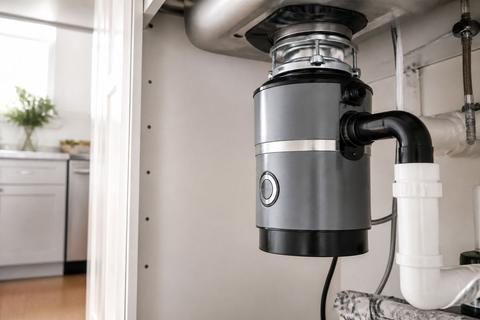
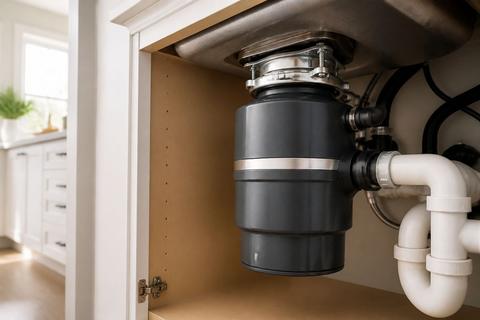
- Inspect the flange under the sink where the disposal mounts to the mounting ring; look for gaps, movement, or rust at the connection.
- If you have a dishwasher, check the dishwasher inlet connection and discharge line—loose hose clamps or connections can cause vibration.
- Look for obvious looseness around the disposal body where it meets the mounting bracket.
Tighten accessible fasteners without overtightening
- Use the correct wrench/bit for the mounting hardware you can access from below the sink—tighten evenly until snug.
- Don’t force corroded hardware; stop if fasteners resist or strip.
- For a side leak or mounting leak, tighten the mounting ring only if it is clearly loose; if the leak is coming from failed internal seals, tightening won’t solve it.
Test the unit for vibration, noise, and leaks
- Restore power and run the disposal with cold water for 30–60 seconds.
- Listen for grinding that sounds smooth rather than metallic rattling, and watch the sink flange area for new or worsening drips.
- If the disposal continues to rattle or becomes unsteady again, the issue is likely internal damage rather than external looseness.
If the blades or impellers are damaged
Look for bent, cracked, or badly worn parts
Internal damage shows up as persistent metal-on-metal sounds, uneven grinding, or failure to spin even after a jam is cleared. Bent impeller components create vibration you can feel in the mounting housing; cracked or badly worn grinding parts lead to repeat noise and poor waste reduction even with fresh power cycles.
Decide whether a repair part is available for your model
First identify your disposal brand and model number (GE model numbers start with GFC for continuous-feed units like GFC520N, GFC1020N and GFB for batch-feed units like GFB760N). Then check for manufacturer-approved replacement parts for your exact model—impeller assemblies and grind components are not universal. If the only available fix is an entire disposal replacement, that’s the safer and more cost-effective route.
Replace the disposal when internal wear is beyond repair
Replace the unit if internal wear causes repeated blade/impeller problems, if water is dripping from the bottom housing (failed internal seal), or if performance never returns to normal after clearing jams and tightening mounting hardware. Also replace when electrical issues persist after resets because internal damage can worsen quickly and create a safety risk.
How to prevent future looseness and jams
Avoid fibrous, starchy, and hard materials
Keep fibrous materials like celery stems and corn husks out of the disposal, and avoid starchy loads such as large amounts of pasta or dough. Hard items like bones should never go in; they can damage grind elements and increase vibration. Let water and softer food scraps do the work—then stop adding material once grinding is smooth.
Run cold water during and after use
Cold water helps solid waste flush through and reduces buildup inside the grinding chamber. Run water while the disposal is operating, then keep it running for a short period after you stop grinding so residue clears from the chamber and discharge line.
Clean the disposal regularly and use it correctly
Use the disposal regularly with normal amounts of waste—long idle periods allow residue to harden. Periodically flush with cold water and grind-cycle small safe pieces (like citrus peel) to help reduce lingering odors. Never use chemical drain cleaners inside the disposal; flush with water and keep debris out to prevent internal damage and loosening from imbalance.
When to call a plumber or replace the unit
Persistent grinding, rattling, or humming
Call a plumber if the disposal keeps rattling after you tighten accessible mounting hardware and clear minor jams, or if it hums repeatedly without spinning. For a GE disposal that hums but won’t grind, cut power, insert a 1/4-inch hex (Allen) wrench into the hex socket in the center of the unit’s underside, and work it back and forth a full rotation to free the impeller plate before pressing reset.
Recurring leaks, reset failures, or electrical issues
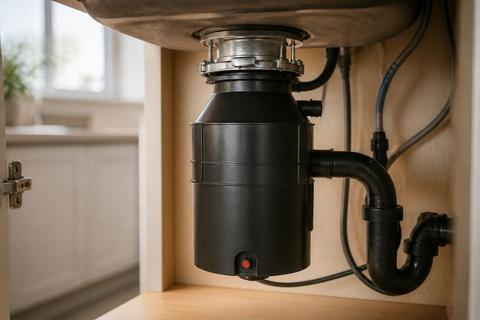
A leak at the sink flange on a GE disposal usually means the plumber’s putty seal or mounting ring has loosened; a leak at the side points to the dishwasher hose clamp or discharge tube gasket. Water dripping from the bottom housing means an internal seal failed—replace the disposal, don’t repair. If the red overload reset button (on the bottom of the motor housing on GE units) won’t solve repeated trip-outs, call a licensed plumber.
Older disposals with repeated blade or mount problems
If the unit is old and you keep dealing with blade/impeller wear, mounting problems, or repeated jams, replacement is typically the better long-term fix. Frequent re-tightening is a sign that the system is losing integrity, and internal wear will keep reintroducing vibration and noise. A plumber can evaluate whether the mounting and seals are still serviceable for your model.
Frequently Asked Questions
Can you actually tighten garbage disposal blades?
In many disposals, the grinding parts are not meant to be individually tightened by homeowners. What you can often tighten is the mounting assembly, hardware, or loose connections that make the unit feel unstable. If the internal grind components are damaged, replacement is usually the safer fix.
What should I do if the disposal hums but won’t grind?
Shut off power first, then clear the jam using the proper method for your model. A humming disposal often points to an obstruction, not loose blades. If the motor or grind mechanism is worn, professional repair or replacement may be needed.
Is it safe to use a wrench or screwdriver inside the disposal?
Only if your model’s manual specifically allows that method and the power is fully disconnected. Never put your hand inside the unit, and avoid forcing parts that resist movement. If you’re unsure, stop and call a professional.
How do I know if I need a new garbage disposal instead of a repair?
Frequent jams, severe corrosion, persistent leaks, loud metal-on-metal noises, or repeated electrical problems are strong signs the unit is near the end of its life. If tightening does not fix the issue and internal parts are worn, replacement is often the better investment.