Why Your Window AC Freezes Up and How to Defrost It
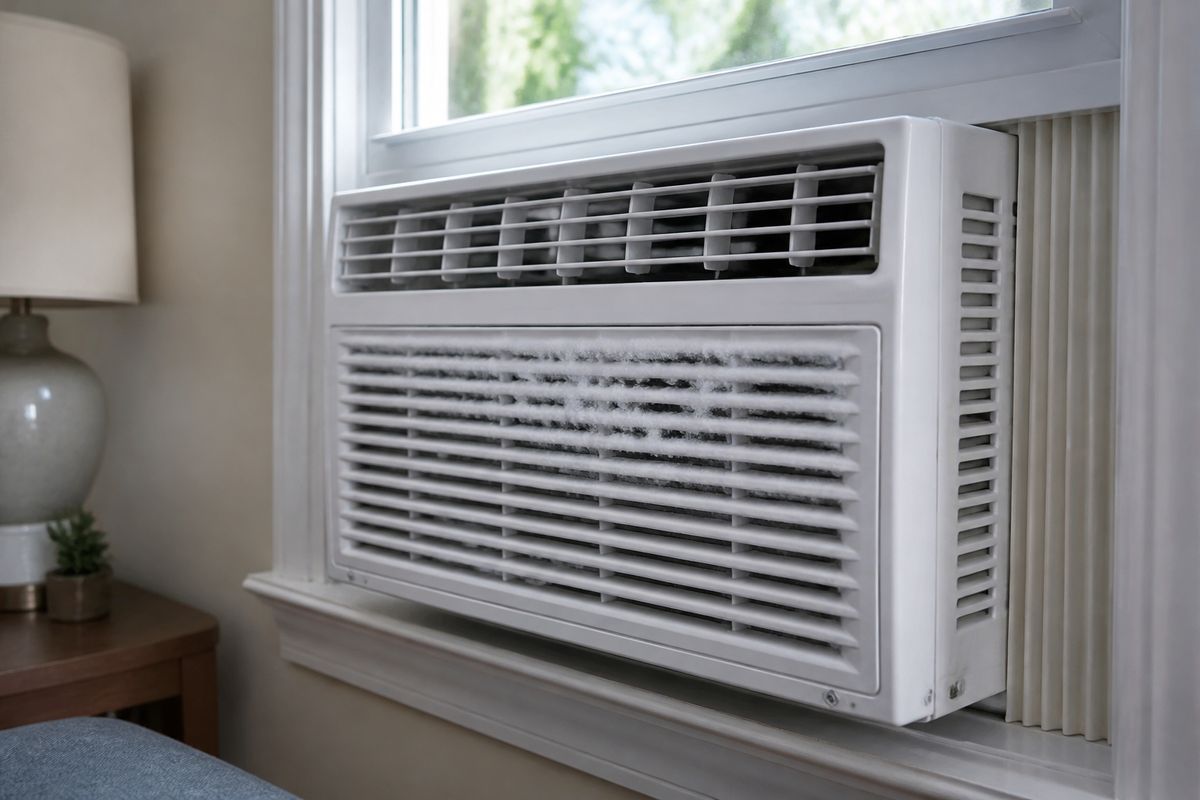
If your window air conditioner freezing up happens every time the weather turns hot, you’re not alone—and it’s a problem you can usually fix by addressing airflow and moisture. When the unit can’t move air over the cooling coil efficiently, ice forms and the system loses performance fast. The good news: you can safely defrost it and then stop it from coming back by correcting the real cause.
For more help, see our Window Air Conditioner Not Working: Diagnose Every Common Cause guide.
What’s Actually Freezing Inside the Unit?
How ice forms on the evaporator coil
Inside a window AC, the evaporator coil cools the air. When warm, humid room air passes over this cold coil, moisture condenses and then freezes if the coil surface drops below freezing. Ice restricts airflow across the coil, which makes the coil get even colder and creates a cycle: less airflow → colder coil → more ice.
The ice doesn’t form “because it’s cold outside”—it forms because the coil is getting too cold for the way your unit is operating. The most common triggers are reduced airflow (dirty filter, blocked intake) and improper temperature control.
Why low airflow and low refrigerant look similar
Low airflow and low refrigerant both lead to a very cold evaporator coil, so the symptoms overlap: reduced cooling, a frosty or fully iced coil, and eventually water pooling or poor drainage. With restricted airflow, the coil doesn’t get warmed by incoming air, so it overcools and freezes. With low refrigerant (often from a leak), the coil surface temperature drops because the system isn’t circulating the correct amount of refrigerant.
A practical clue: if cleaning the filter and ensuring strong fan airflow stops the freezing, airflow was the primary issue. If freezing resumes right away after airflow fixes, sealed-system refrigerant or component problems are more likely.
Signs your window AC is freezing up versus just cooling poorly
Freezing shows visible buildup: white frost on the front coil area, thick ice around the evaporator fins, or ice forming on the grille. Cooling poorly can look similar at first (warm room, weak airflow), but it won’t show expanding ice patterns.
Also look for airflow behavior: when freezing starts, airflow often feels weaker because ice blocks the path. If the fan runs but cold air never really arrives while ice grows, that’s a strong indicator you’re dealing with an icing problem—not just normal performance limits.
The Most Common Causes of a Frozen Window AC
Dirty filter, blocked vents, and weak airflow
Restricted airflow is the #1 reason window AC units freeze. Dust on the filter reduces the amount of warm air reaching the evaporator coil, so the coil gets too cold. Blocked vents—either from furniture, curtains, or debris around the intake—produce the same effect.
Fix airflow by clearing the path (front intake and side air paths), removing obstructions, and restoring fan performance. If your unit has a washable filter reminder (like “Filter” or “Reset Filter”), clean the filter and reset the indicator to keep airflow consistent.
Thermostat settings that push the coil below freezing
Setting the thermostat too low for extended periods can make the evaporator coil run colder than intended—especially in humid rooms. Many window units attempt to cool continuously to reach the setpoint quickly, which increases the risk of overcooling and icing.
Use a moderate setpoint and let the fan cycle or maintain temperature rather than demanding maximum cooling nonstop. If the room is humid, prioritize steady dehumidifying rather than driving the thermostat aggressively low.
A unit that’s undersized, oversized, or poorly installed
If the unit is undersized for your room, it will run longer and struggle to remove moisture efficiently, raising icing risk during high humidity. If it’s oversized, short cycling can reduce effective dehumidification and still leave coil conditions unstable.
Installation matters: a correctly installed window AC tilts slightly downward toward the outside so condensate drains. A tilt problem can trap moisture around internal components, worsening freezing behavior and drainage issues.
Low refrigerant or a leak that needs professional repair
Low refrigerant changes evaporator operation so the coil temperature drops too far and freezes. Refrigerant loss almost always comes from a leak, and sealed-system repair requires professional equipment to locate leaks, evacuate, and recharge correctly.
If you clean the filter, confirm strong airflow, and the unit freezes again quickly, treat refrigerant loss as a real possibility. Many models also display fault codes for refrigerant or sensor problems—use the code to guide service decisions.
Drainage problems, humidity, and excess moisture buildup
Even with good airflow, high indoor humidity increases condensation load. If drainage is clogged or the unit isn’t tilted correctly, water can back up, raising local humidity near the coil and contributing to ice formation or refreezing cycles after partial melting.
Look for signs like water collecting inside, water dripping from places it shouldn’t, or standing moisture around the unit. Clearing the drain path and ensuring correct tilt prevents moisture from becoming trapped.
How to Defrost a Window Air Conditioner Safely
Turn the unit off and switch the fan to circulate air
Do not keep running the compressor while ice is on the coil. Running in a frozen state can stress components and deepen icing.
- Turn the AC to OFF.
- Set FAN to ON (or “Fan Only” if your model offers it) so air moves across the evaporator area without forcing refrigerant cooling.
- Leave the unit running on fan-only until the ice starts melting and you no longer see expanding frost.
This approach speeds defrost while preventing additional cold buildup.
Let the ice melt naturally and protect the surrounding area
Give the coil time to warm up fully. Place towels or a shallow pan under the unit area where water may drip during melting. Improve safety by keeping floors clear and avoiding electrical contact with pooled water.
- Turn off the unit if your model doesn’t support fan-only.
- Let the ice melt on its own for several hours.
- Wipe up meltwater as it collects, especially around the base and inside window sill area.
Once the coil is clear, you can clean and restart with the correct settings.
Remove the filter and clean dust from accessible parts
A defrost that doesn’t include airflow cleanup won’t hold. After the ice melts, remove the filter and remove the dust layer that likely caused restricted airflow.
- Unplug the unit or switch it fully OFF at the control panel.
- Slide out the filter from the front grille.
- Rinse washable mesh filters in lukewarm water, then let them dry completely.
- Wipe accessible dust from the front grille and intake area—do not reach into sealed areas.
Clean filters restore proper airflow so the evaporator coil gets warmed by incoming air instead of overcooling.
When and how to use a hair dryer or gentle heat safely
Only use supplemental heat if the ice layer is stubborn and you can’t safely wait. Keep heat controlled to avoid damaging plastic parts or electrical components.
- Switch the unit OFF and unplug it first.
- Use a low hair dryer setting and keep it moving—aim at the coil fins from a safe distance.
- Stop immediately if you see plastic warping, smell scorching, or water splattering excessively.
Let the unit air out before restoring power. Gentle heat is a last step, not the main defrost method.
What not to do: chiseling ice or running the compressor
Never damage coil fins or electrical components. Chiseling or scraping can bend the evaporator fins, reduce cooling performance, and create leaks that lead to future refrigerant loss.
Also never run the compressor while ice is present. The system will continue to pull heat out of the coil, worsening the freeze and increasing wear.
- Do not use metal tools to chip ice off fins.
- Do not run Cool mode while ice remains.
- Do not unplug and replug repeatedly in quick succession—most units need a compressor protection delay after power cycling.
Fix the Underlying Problem Before You Restart It
Clean or replace the air filter
Before restarting, restore airflow with a clean filter. If your filter is very clogged, replacing it is faster and more reliable than repeated rinsing.
- Remove the filter and inspect it against a light source.
- If it looks gray, rigid with buildup, or won’t fully restore airflow after cleaning, replace it.
- Reinstall the filter securely and ensure it sits flat in its tracks.
After a defrost, a clean filter can be the difference between a one-time freeze and a recurring problem.
Clear the evaporator area and outdoor coil intake
Window AC units need two separate airflow paths: room air through the front, and outdoor air through the condenser side. If either side is restricted, coil temperatures go out of range.
- Remove visible debris from around the outdoor coil intake.
- Check for blocked intake by leaves, plastic wrap, or dust buildup.
- Wipe the accessible condenser surfaces gently—avoid bending fins.
Clear airflow prevents the evaporator from overcooling and helps the system reject heat properly.
Check the tilt, level, and window installation
Proper tilt directs condensate outdoors. If the unit is tilted backward (inside too low), water can pool, increasing moisture around the unit and contributing to icing and leakage.
- Use a level to check the front-to-back pitch.
- Adjust the window install so the unit tilts slightly downward toward the outside (about 1/4 to 1/2 inch).
- Confirm the support brackets and window sash are holding the unit firmly.
Fixing tilt stops moisture from backing up and refreezing cycles.
Match the setting to the room size and humidity
Restart with settings that control temperature and humidity without pushing the coil too cold. In humid conditions, aggressive cooling can freeze the coil even if airflow is correct.
- Set the thermostat to a moderate temperature instead of the coldest setting.
- Use the fan continuously at a speed that maintains strong airflow.
- Keep the unit running long enough to manage humidity, but avoid constant maximum cooling in very damp rooms.
Your goal is stable operation, not quickest temperature drops at any cost.
Inspect the drain path for trapped water or debris
Drainage issues can keep moisture near the evaporator and worsen icing. Many window units use a drain path that can clog with dust and debris.
- Look for standing water around the base pan area.
- Check the drain path for trapped gunk and remove debris you can reach safely.
- Ensure water doesn’t drip inside due to clogged internal paths or incorrect tilt.
If the drain path repeatedly clogs, schedule a more thorough cleaning before peak humidity returns.
When Freezing Means Something More Serious
How to tell if the refrigerant is low
Low refrigerant is a sealed-system issue and can’t be fixed by “topping it off” safely. Look for persistent freezing even after filter cleaning and strong airflow, plus signs like reduced cold output and unusual frosting patterns.
Some window units show fault codes tied to refrigerant or system sensors. Examples include flashing codes such as E1 (sensor/open or refrigerant-leak detection) on Midea-built models, or CH-prefixed codes on LG models. Match the code to your unit’s manual and plan service accordingly.
Compressor, fan motor, and sensor issues that need service
If the compressor is struggling, the fan can’t move air, or a temperature sensor misreads coil conditions, the unit can freeze despite clean airflow. Symptoms include erratic fan operation, grinding or failing fan sounds, or repeated icing even after multiple resets/cleanings.
If you hear abnormal motor noises, see a fan that won’t ramp properly, or get a persistent error code, service is the correct next step. These are component-level problems that require diagnosis beyond basic maintenance.
When a frozen coil becomes a recurring pattern
A first freeze often points to an immediate airflow issue or a one-off humidity condition. Recurring freezing points to a persistent restriction (hidden blockage), chronic tilt/drain failure, undersizing for humidity, or a sealed-system fault.
Track how fast the unit freezes after defrosting and what you changed. If the coil refreezes within a short run time after you restored clean filters and airflow, treat it as an ongoing system problem, not a one-time event.
Why DIY refrigerant recharge kits usually are not the fix
DIY recharge kits can be dangerously inaccurate. Refrigerant charging requires correct procedure, vacuum evacuation, leak detection, and the exact charge for your specific model and ambient conditions. Overcharging or undercharging can damage the compressor and worsen coil icing.
Additionally, leaks must be found and repaired before any recharge. If freezing continues after airflow corrections, it’s a sign to use a licensed technician rather than adding refrigerant yourself.
How to Prevent Your Window AC From Freezing Again
Use the right temperature and fan settings
Prevent icing by keeping the unit from overcooling the coil. Use a moderate thermostat setting and maintain strong airflow through the front intake.
- Avoid setting the temperature to the coldest setting for long continuous runs.
- Keep the fan running strongly when humidity is high.
- Adjust settings gradually after restart so the unit stabilizes instead of cycling into extreme coil temperatures.
This reduces the chance that the evaporator will drop too far below freezing.
Keep the filter on a cleaning schedule
A dirty filter gradually creates the conditions for icing—so regular cleaning is your best prevention.
- Clean the washable filter at least once every couple of weeks during heavy use.
- In dusty environments, check it weekly.
- Replace non-washable filters when they stop restoring airflow after cleaning.
If your model has a “Filter” or “Reset Filter” reminder light, clear it after maintenance to keep the schedule accurate.
Give the unit enough clearance for airflow
Airflow can be blocked without you noticing—by curtains, furniture, or even stacked storage beside the unit. Clearance ensures room air reaches the evaporator efficiently.
- Keep curtains and drapes away from the front intake grille.
- Leave space around the sides so airflow can enter and exit freely.
- Remove debris that accumulates near the outdoor condenser intake.
Proper clearance helps stabilize coil temperatures and prevents repeated freeze-ups.
Use it appropriately in shoulder seasons and humid weather
Humidity swings in shoulder seasons can trigger icing even when outdoor temperatures aren’t extreme. Use fan speed and temperature settings that account for moisture, not just temperature.
- In humid weather, avoid extreme cold setpoints.
- Use continuous fan if your unit allows it to keep airflow steady.
- If the room stays damp, prioritize consistent operation rather than rapid on/off cycling.
Stable operation reduces peak coil overcooling.
Prepare and store the unit properly for winter
Winter storage keeps dust and moisture from interfering with airflow and coil condition the next season. Poor storage can cause debris buildup that blocks vents and leads to freezing the first time you run the unit.
- After the season, clean the filter and wipe accessible dust from grilles.
- Dry the unit thoroughly before covering or storing.
- Store in a dry area and keep the intake/exhaust openings protected from insects and debris.
When you reinstall, verify tilt and drain path again.
Choosing a Better Unit If Freezing Keeps Happening
How room size affects cooling performance
Room size determines both sensible cooling and moisture removal capacity. An undersized unit runs longer and keeps the evaporator operating under conditions that increase freezing risk, especially in humid rooms.
- Calculate your room’s approximate square footage.
- Choose a unit with BTUs appropriate for that space.
- Match humidity conditions—bigger in humid climates often means better performance and less icing.
If freezing persists after maintenance, capacity mismatch is a strong candidate.
What to look for in quiet, efficient window units
A good unit doesn’t just cool—it also maintains stable airflow and dehumidifies without pushing the evaporator into icing conditions. Look for features that support stable operation and efficient fan behavior.
- Choose units with multiple fan speeds and a fan mode you can use to maintain airflow.
- Prioritize good energy efficiency ratings to reduce strain.
- Look for reliable airflow design and a filter system that’s easy to clean regularly.
Better airflow control reduces how often the coil reaches freezing conditions.
Why wattage, BTUs, and installation type matter
Wattage and BTUs influence run time and how aggressively the unit operates. Installation type affects heat rejection and condensate drainage, both of which impact coil behavior.
- Use the manufacturer’s sizing guidance based on your room.
- Ensure correct window installation kit use and a proper tilt toward the outside.
- Confirm the unit exhaust area isn’t trapped by walls or awnings.
Incorrect installation can produce airflow imbalance that causes freezing even when the unit is adequately sized.
When a low-profile or casement model is a better fit
If your window area limits airflow or your current unit can’t be installed with correct clearance and tilt, a different form factor can improve performance. Low-profile or casement-friendly designs can reduce obstruction and improve intake/exhaust consistency.
- Choose a model that matches your window opening and can sit with the correct slight outward tilt.
- Ensure the outdoor portion has airflow clearance for the condenser intake.
- Prefer designs with accessible filters and reliable drainage behavior.
If physical constraints caused the original freezing pattern, choosing a better fit can eliminate the root limitation.
Frequently Asked Questions
Why does my window air conditioner freeze up even when it’s hot outside?
The most common cause is restricted airflow from a dirty filter, blocked vents, or a failing fan. When airflow drops, the evaporator coil gets too cold and moisture freezes on the coil fins. Low refrigerant can also cause the same effect by making the coil temperature drop below freezing.
Start by cleaning the filter and ensuring the front grille intake is unobstructed, then check for strong fan airflow. If it refreezes quickly after those fixes, suspect airflow-related hardware problems or sealed-system issues that need service.
Can I run my window AC if it has ice on it?
No. Running a window AC while the coil is iced forces the compressor to operate under conditions that can worsen icing and increase strain on components.
Turn the unit off and switch to fan-only (or leave it off so the ice can melt). Once the coil fully thaws and the airflow is restored (clean filter, clear intake), restart using moderate temperature settings.
How long does it take to defrost a window air conditioner?
Defrost time depends on how much ice has built up and how warm the surrounding air is. A full defrost often takes several hours with the unit off (or on fan-only).
If you switch to fan-only mode and ensure strong airflow through the front intake, the ice usually melts faster than waiting with everything off. Thick ice layers at the coil typically require longer until the fins are fully clear.
Should I add refrigerant to a window AC that freezes up?
Usually not. A frozen unit doesn’t automatically mean it needs refrigerant, and adding refrigerant without finding and repairing a leak is not the correct fix. Also, charging requires proper evacuation and the exact factory charge—DIY top-ups can lead to incorrect pressure and more icing.
If freezing persists after cleaning the filter and restoring airflow, treat it as a sealed-system concern. Use a licensed technician to diagnose refrigerant loss and component/sensor faults.
How do I stop my window AC from freezing overnight?
To stop overnight freezing, clean the filter, raise the temperature setting a few degrees, and make sure the fan runs strongly rather than low or cycling too aggressively. Avoid setting the thermostat to the coldest temperature for long periods when humidity is high.
Also verify correct airflow clearance around the front grille and confirm the unit is tilted so condensate drains outdoors. If it still freezes overnight after these steps, the underlying issue is likely drainage, airflow hardware, or a recurring coil/system fault.